


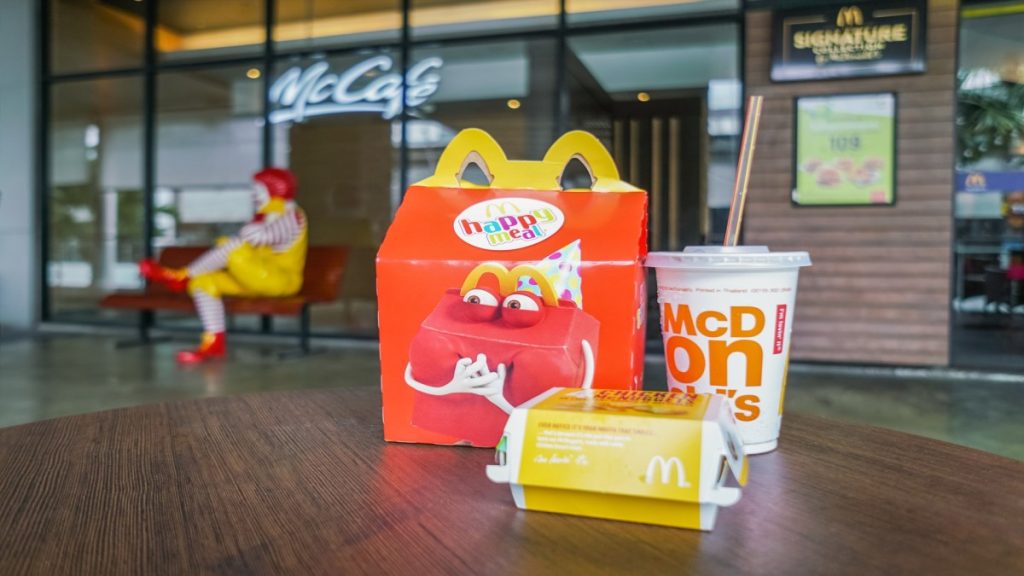
McDonald’s relaunch of its iconic Happy Meal collaborations is set to delight both kids and investors, as the fast-food giant leverages its beloved brand to drive sales and boost market share in a competitive industry.
Key Takeaways
- McDonald’s is reviving its limited-time promotions and iconic toys with the Happy Meal, a marketing strategy that has been successful since its launch in 1977.
- The company has over 44,000 locations across more than 100 countries, making the Happy Meal a powerful tool for global brand recognition and sales growth.
- This move is part of McDonald’s efforts to stay competitive in the fast-food industry, which is experiencing increased competition from newer, trendy brands and changing consumer preferences.
McDonald’s Happy Meal: A Deep Dive
Since its introduction in 1977, the Happy Meal has become an integral part of McDonald’s brand identity, offering a combination of a meal, toy, and entertainment that has captivated children and families worldwide. The concept was revolutionary at the time, as it not only provided a convenient and affordable meal option for parents but also created a unique experience that differentiated McDonald’s from its competitors. Over the years, the Happy Meal has undergone several transformations, including changes to its menu offerings, toy selections, and packaging, all aimed at keeping the brand fresh and appealing to new generations of consumers.
The Happy Meal’s impact on McDonald’s business cannot be overstated. It has been a significant driver of sales, particularly during recessions or periods of economic uncertainty, when families are more likely to opt for affordable dining options. Furthermore, the limited-time promotions and special edition toys associated with the Happy Meal create a sense of urgency and exclusivity, encouraging customers to visit McDonald’s more frequently to collect the latest items. This strategy has been highly effective, with many of the Happy Meal toys becoming collectibles and contributing to the brand’s nostalgia and appeal.
Context: Why This Matters Now
The current economic environment, marked by inflation and shifting consumer behaviors, presents both challenges and opportunities for McDonald’s. As prices rise, consumers are becoming more budget-conscious, seeking value for their money. The Happy Meal, with its fixed price and perceived value, is well-positioned to attract price-sensitive customers. Additionally, the brand’s global presence and scale give it the flexibility to adjust its menu and marketing strategies in response to local market conditions, allowing it to stay competitive in diverse economic environments.
Historically, similar marketing strategies have been successful for McDonald’s. For instance, during the 2008 financial crisis, the company focused on its dollar menu and other value offerings, which helped maintain sales volumes. More recently, the 2021 tech boom and the rise of digital platforms have led to increased competition from delivery and meal kit services, prompting McDonald’s to invest in its digital capabilities and enhance the customer experience through mobile ordering and self-service kiosks.
Pros and Cons for Your Portfolio
- Risk: The success of the Happy Meal relaunch is not guaranteed and depends on various factors, including consumer reception, competition, and economic conditions. If the strategy fails to resonate with the target audience or if the company faces significant supply chain disruptions, it could negatively impact sales and profitability.
- Opportunity: A successful relaunch of the Happy Meal collaborations could lead to increased brand loyalty, higher sales, and improved profitability for McDonald’s. This, in turn, could positively affect the company’s stock performance, making it an attractive investment opportunity for those looking to capitalize on the brand’s potential for growth and recovery.
What This Means for Investors
For investors considering McDonald’s stock, it’s essential to weigh the potential benefits of the Happy Meal relaunch against the broader market and economic trends. Given the brand’s resilience and ability to adapt to changing consumer preferences, McDonald’s could be a stable addition to a diversified portfolio. However, investors should remain cautious and monitor the company’s performance, particularly in relation to its competitors and the overall fast-food industry. A strategic approach might involve a long-term perspective, focusing on the company’s ability to innovate and maintain its market share in a competitive environment.
Imagine an investor who bought McDonald’s stock during the 2020 pandemic, when the company was facing significant challenges due to lockdowns and supply chain disruptions. Despite these hurdles, McDonald’s managed to navigate the crisis through its strong brand, digital investments, and operational efficiencies. Today, with the Happy Meal relaunch and ongoing efforts to enhance customer experience, the company is poised for potential growth, making it an interesting case for investors looking for brands with enduring value and the capacity to evolve with the market.

 UBS Issues Bold Nvidia Stock Forecast: What Investors Need
  Geopolitical Instability Grounds Flights: What Travelers Need to Know
  Furniture Giant Collapses: Turnaround Failure Shocks Industry
  Walmart’s $29 DIY 30-Drawer Organizer: Space-Saving Solution
  Chevron Ownership Breakdown: Institutional & Insider Holdings
  Caregiver Realization: Navigating the New Reality