


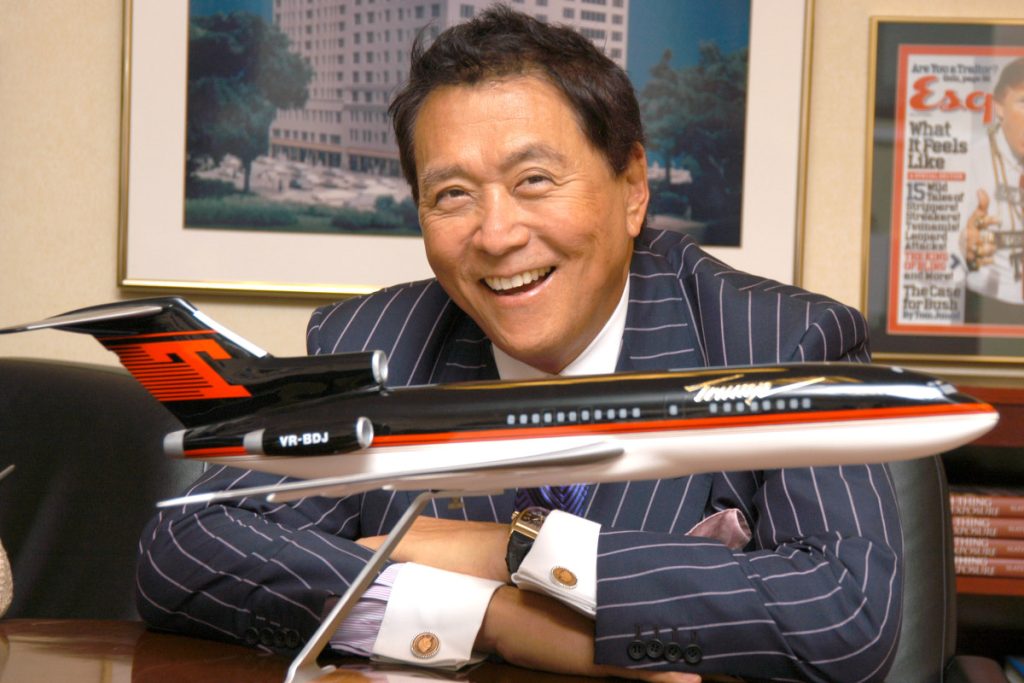
As the personal finance landscape continues to evolve, one book remains a timeless classic, offering insights that are just as relevant today as they were over two decades ago: Robert Kiyosaki’s “Rich Dad Poor Dad”, a seminal work that has been a top-10 staple in the personal finance category since its publication in 1997.
Key Takeaways
- Robert Kiyosaki’s “Rich Dad Poor Dad” has been a top-10 bestseller in the personal finance category for over 20 years.
- The book offers insights into wealth creation, financial literacy, and the importance of financial independence.
- Kiyosaki’s principles, such as inflation and its impact on investments, remain crucial for investors to understand in today’s economic climate.
Robert Kiyosaki’s Wealth Secrets: A Deep Dive
Robert Kiyosaki’s “Rich Dad Poor Dad” was first published in 1997, and over 20 years later, the book continues to be a valuable resource for those seeking to improve their financial literacy and create wealth. The book’s enduring popularity can be attributed to its timeless principles, which emphasize the importance of financial education, smart investing, and entrepreneurship. Kiyosaki’s story, which contrasts the financial philosophies of his “poor dad” (his own father) with those of his “rich dad” (his best friend’s father), offers a unique perspective on wealth creation and the importance of thinking differently about money.
One of the key concepts discussed in the book is the impact of inflation on investments. Inflation, which refers to the rate at which prices for goods and services are rising, can erode the purchasing power of money over time. For example, imagine an investor who bought a bond with a 5% annual return, only to see the inflation rate rise to 3%. In this scenario, the investor’s real return would be only 2%, highlighting the importance of considering inflation when making investment decisions.
Context: Why This Matters Now
The principles outlined in “Rich Dad Poor Dad” are particularly relevant in today’s economic climate, where inflation and market volatility are ongoing concerns. Similar to the 2008 financial crisis, investors are once again facing a complex and rapidly changing economic landscape, where traditional investment strategies may not be enough to ensure long-term financial security. By understanding Kiyosaki’s principles, investors can better navigate these challenges and make informed decisions about their investments.
Historically, similar periods of economic uncertainty have led to increased interest in alternative investment strategies, such as real estate investing and entrepreneurship. For instance, during the 2021 tech boom, many investors turned to alternative assets, such as cryptocurrency and private equity, in search of higher returns. By considering these alternative strategies, investors can potentially reduce their risk and increase their potential for long-term wealth creation.
Pros and Cons for Your Portfolio
- Risk: One potential downside of implementing Kiyosaki’s principles is the risk of over-leveraging, or taking on too much debt in pursuit of investment opportunities. This can lead to financial difficulties if investments do not perform as expected.
- Opportunity: On the other hand, by embracing Kiyosaki’s principles, investors can potentially create significant wealth and achieve financial independence. For example, by investing in real estate or starting a business, investors can generate passive income and build long-term wealth.
What This Means for Investors
So, what can investors take away from Robert Kiyosaki’s “Rich Dad Poor Dad”? First and foremost, it is essential to prioritize financial education and literacy. By understanding key concepts, such as inflation and compound interest, investors can make more informed decisions about their investments. Additionally, investors should consider alternative investment strategies, such as real estate investing and entrepreneurship, which can potentially reduce risk and increase long-term wealth creation.
Ultimately, the key to achieving financial independence is to think differently about money and to be willing to take calculated risks. By embracing Kiyosaki’s principles and staying informed about the latest market trends and economic developments, investors can navigate the complex world of finance with confidence and achieve their long-term financial goals. As Kiyosaki himself has said, “It’s not how much money you make, but how much money you keep, how hard it works for you, and how many generations you keep it for.”

 Disney Shakeup: What’s Behind Latest Executive Changes
  Credo’s Hidden Risk: Wall Street’s Overlooked Threat
  $1,600 Hidden Fee Angers Car Buyers: What You Need to Know
  Single-Step Futon Sofa Bed on Sale for $117 at Walmart
  Gas Prices Soar 9% to 11-Month High: What’s Next
  Chick-fil-A Unveils 7 Exciting Spring 2026 Menu Items