

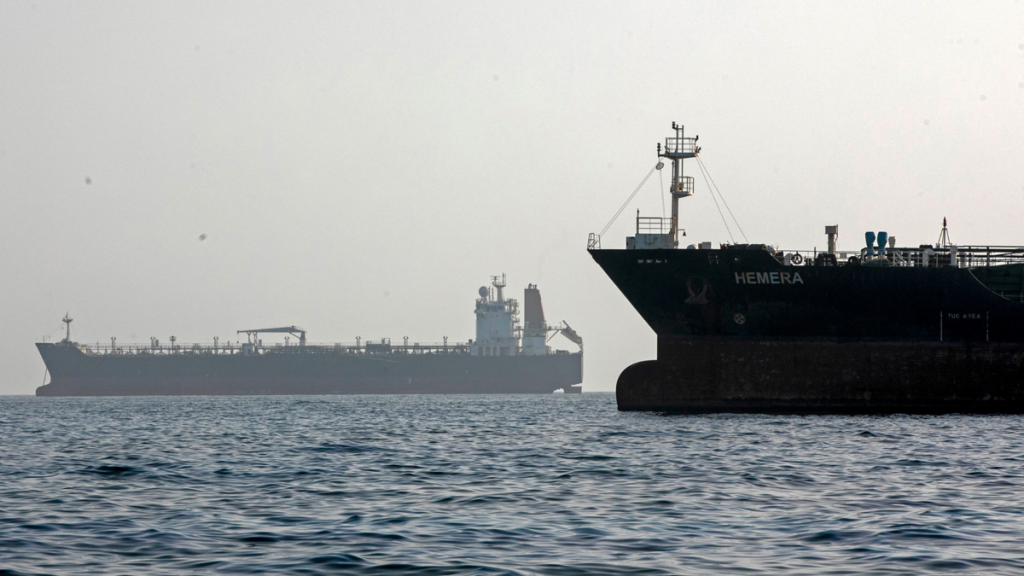
In the midst of a global economic crisis sparked by the threat of a prolonged closure of the Strait of Hormuz, one century-old dividend stock has emerged as a beacon of hope, sending its shares skyrocketing 77% higher over the past six months.
Key Takeaways
- The prolonged closure of the Strait of Hormuz could lead to increased demand for Dow Inc.’s (DOW) products, driving its stock price higher.
- Dow’s diversified product portfolio and strong balance sheet make it well-positioned to capitalize on the Hormuz crisis.
- Investors should consider the potential risks and opportunities associated with investing in Dow Inc. amidst the ongoing economic uncertainty.
Understanding the Hormuz Crisis and Its Impact on Dow Inc.
The Strait of Hormuz is a critical waterway connecting the Persian Gulf to the Gulf of Oman, through which approximately 20% of the world’s oil supply passes.
A prolonged closure of the Strait would disrupt global oil supply chains, leading to increased prices and potential shortages.
Dow Inc., a leading manufacturer of chemicals and plastics, has seen its stock price rise as investors bet on increased demand for its products in the event of a prolonged Hormuz crisis.
The company’s diversified product portfolio, including chemicals, plastics, and coatings, makes it well-positioned to capitalize on the crisis.
Context: Why This Matters Now
The Hormuz crisis is not a new phenomenon, with previous incidents in 2019 and 2021 highlighting the region’s volatility.
However, the current situation is more complex, with escalating tensions between the US and Iran, as well as a global economic slowdown.
The impact of the crisis on global markets is still unfolding, with many experts predicting a potential recession in the coming months.
Pros and Cons for Your Portfolio
- Risk: Investing in Dow Inc. amidst the Hormuz crisis comes with significant risks, including potential price volatility and decreased demand for its products if the crisis is resolved quickly.
- Opportunity: With its diversified product portfolio and strong balance sheet, Dow Inc. could capitalize on the crisis, driving its stock price higher and providing investors with a potential upside.
What This Means for Investors
Investors should approach the situation with caution, considering both the potential risks and opportunities associated with investing in Dow Inc.
Those with a long-term perspective and a focus on dividend investing may find Dow Inc. to be an attractive option, given its 3.8% dividend yield and potential for price appreciation.
However, investors should also be aware of the potential risks, including decreased demand for Dow’s products if the crisis is resolved quickly.
Historical Context: A Look Back at Previous Crises
Similar to the 2008 financial crisis, the Hormuz crisis has the potential to disrupt global supply chains and drive up prices.
However, unlike the 2008 crisis, which was largely driven by subprime mortgage debt, the Hormuz crisis is a more complex issue, with multiple factors at play.
Investors should be aware of the potential for price volatility and consider diversifying their portfolios to mitigate risk.
Conclusion
The Hormuz crisis presents a complex set of challenges and opportunities for investors, with Dow Inc. emerging as a potential beneficiary of the crisis.
Investors should approach the situation with caution, considering both the potential risks and opportunities associated with investing in Dow Inc.
A well-diversified portfolio and a long-term perspective can help investors navigate the uncertainty and potentially profit from the crisis.
What You Need to Know
Here are some key takeaways for investors:
Dow Inc. (DOW) has seen its stock price rise 77% over the past six months amidst the Hormuz crisis.
The company’s diversified product portfolio and strong balance sheet make it well-positioned to capitalize on the crisis.
Investors should consider the potential risks and opportunities associated with investing in Dow Inc. amidst the ongoing economic uncertainty.

