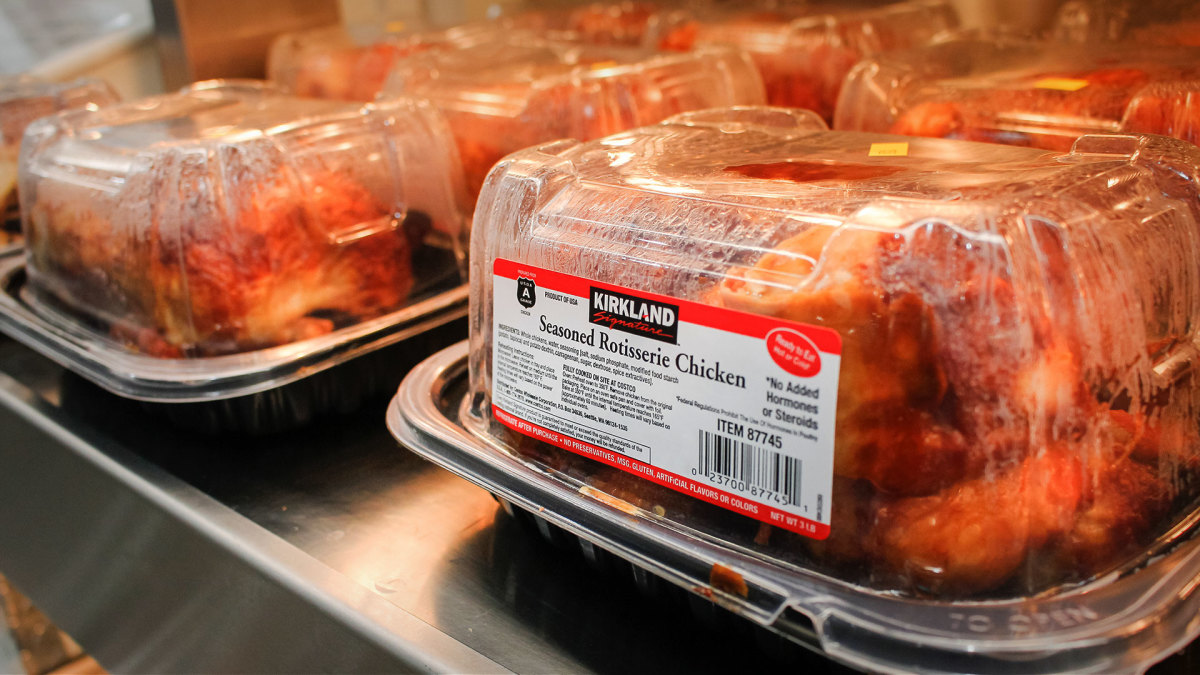
The US Department of Agriculture (USDA) has raised concerns over Costco’s $4.99 chicken, a staple item for the warehouse club, sparking debate among investors and consumers about the sustainability of this pricing strategy amidst rising inflation and production costs.
Key Takeaways
- Costco’s $4.99 rotisserie chicken has been a major draw for the company, with the warehouse club going to great lengths to maintain this price point.
- The USDA has expressed concerns over the production and pricing of these chickens, potentially impacting Costco’s business model.
- This situation highlights the challenges companies face in balancing profitability with consumer demand and regulatory compliance.
Costco’s Pricing Strategy: A Deep Dive
Costco’s ability to keep its rotisserie chickens at $4.99 has been a cornerstone of its appeal to budget-conscious consumers. The company has achieved this through various measures, including operating its own chicken processing plants and tightly controlling production costs. This strategy has contributed significantly to Costco’s success, attracting a loyal customer base and driving sales.
However, the USDA’s concerns introduce a new layer of complexity. Imagine an investor who bought into Costco’s stock, drawn by its consistent performance and customer loyalty. This investor would now need to consider the potential impact of regulatory pressure on Costco’s pricing strategy and, by extension, its profitability.
Context: Why This Matters Now
The current economic landscape, marked by rising inflation and increasing production costs, makes Costco’s pricing strategy particularly noteworthy. Inflation, in this context, refers to the general increase in prices of goods and services, which can erode the purchasing power of consumers and affect companies’ profit margins. As production costs rise due to factors like higher feed prices for chickens, maintaining a $4.99 price point becomes increasingly challenging.
Historically, similar challenges have arisen in the retail sector, particularly during times of economic stress. For instance, the 2008 financial crisis led to a significant increase in demand for discount stores and budget-friendly options, benefiting retailers like Costco. However, the current situation is distinct, with the added layer of regulatory scrutiny and supply chain disruptions.
Pros and Cons for Your Portfolio
- Risk: The USDA’s concerns could lead to increased regulatory pressure on Costco, potentially forcing the company to raise prices or alter its business model, which could negatively impact its stock performance.
- Opportunity: If Costco successfully navigates these challenges, possibly by innovating its supply chain or production processes, it could emerge stronger, with a more resilient business model that attracts investors looking for stable, long-term growth.
What This Means for Investors
Investors should closely monitor this situation, considering both the potential risks and opportunities. A strategic approach might involve diversifying portfolios to mitigate risk while keeping a close eye on Costco’s response to the USDA’s concerns. This could involve waiting for clearer signals on how the company intends to address these challenges before making any significant investment decisions.
Ultimately, the outcome will depend on various factors, including Costco’s ability to adapt its business model, the severity of the regulatory pressure, and broader economic trends. Investors who can navigate these complexities effectively may find opportunities for growth, even in a challenging market environment.