


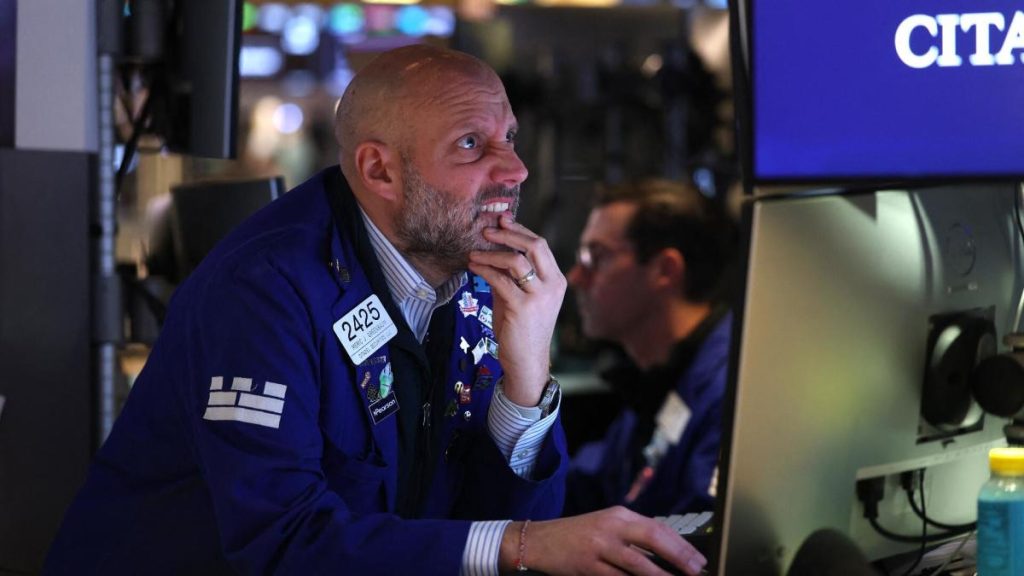
As the global economy teeters on the brink of a potential recession, Fidelity fund manager Lars Schuster is urging investors to remain calm, despite a “low hiring, low firing” market that is taking a toll on consumer sentiment, with recession risks looming large despite surging GDP growth.
Key Takeaways
- Fidelity warns of an imminent recession, citing concerns over consumer sentiment and job market trends.
- Despite GDP growth, the economy is experiencing a “low hiring, low firing” market, which is impacting consumer confidence.
- Fidelity fund manager Lars Schuster is advising investors to remain prepared and calm in the face of potential economic downturn.
Understanding the Warning Signs: A Deep Dive
The warning signs of a potential recession are multifaceted, with the “low hiring, low firing” market being a significant indicator. This phenomenon occurs when companies are neither hiring new employees nor laying off existing ones, resulting in a stagnant job market. Inflation is also a concern, as it can erode consumer purchasing power and decrease demand for goods and services. Imagine an investor who bought into the stock market during a period of high growth, only to see their investments decline in value as the economy slows down.
Historically, similar trends have been observed in the lead-up to previous recessions. For example, in the years preceding the 2008 financial crisis, there were warning signs of a housing market bubble and excessive leverage in the financial system. Similarly, in the early 2000s, the dot-com bubble burst, leading to a recession. In both cases, investors who were prepared and diversified their portfolios were better equipped to weather the economic storm.
Context: Why This Matters Now
The current economic landscape is characterized by a unique combination of factors, including a strong labor market, low unemployment rates, and rising GDP growth. However, despite these positive trends, consumer sentiment is weakening, and the “low hiring, low firing” market is taking its toll. Monetary policy is also a key factor, as central banks navigate the delicate balance between stimulating economic growth and controlling inflation. The Federal Reserve, in particular, has been walking a tightrope, raising interest rates to combat inflation while avoiding a recession.
The global economy is also experiencing a period of heightened uncertainty, with trade tensions, geopolitical conflicts, and climate change all contributing to market volatility. In this environment, investors must be vigilant and prepared for potential downturns. By understanding the warning signs and taking a proactive approach to portfolio management, investors can mitigate risks and capitalize on opportunities.
Pros and Cons for Your Portfolio
- Risk: A potential recession could lead to a decline in stock prices, resulting in losses for investors who are heavily exposed to the market. Diversification and hedging strategies can help mitigate this risk.
- Opportunity: A recession can also create opportunities for investors to buy into high-quality assets at discounted prices, potentially leading to long-term gains. Investors who are prepared and have a strategic approach can capitalize on these opportunities.
What This Means for Investors
In light of Fidelity’s warning, investors should take a step back and reassess their portfolios. This may involve diversifying investments, reducing exposure to volatile assets, and increasing cash holdings. Investors should also remain informed and up-to-date on market trends and economic indicators, seeking out opportunities to buy into high-quality assets at discounted prices. By taking a proactive and strategic approach to portfolio management, investors can navigate the challenges of a potential recession and position themselves for long-term success.
Ultimately, the key to navigating a potential recession is to remain calm, informed, and prepared. By understanding the warning signs, diversifying portfolios, and taking a strategic approach to investment management, investors can mitigate risks and capitalize on opportunities. As Fidelity fund manager Lars Schuster advises, investors should remain vigilant and prepared, but also avoid making rash decisions based on fear or emotion. By taking a disciplined and informed approach, investors can weather the economic storm and emerge stronger on the other side.

 Apple Stock Surges to Record $143B: What’s Behind the Swing
  Nvidia’s $100B Reality Check: What Investors Need to Know
  Cathie Wood Snaps Up $1.9M Megacap Tech Stock: What’s Next?
  Outperforming S&P 500: The Case for Active Management
  J.P. Morgan Ups Gold Price Forecast for 2026: Key Implications
  Nvidia Stock Surges: Morgan Stanley Raises Price Target Aggressively