


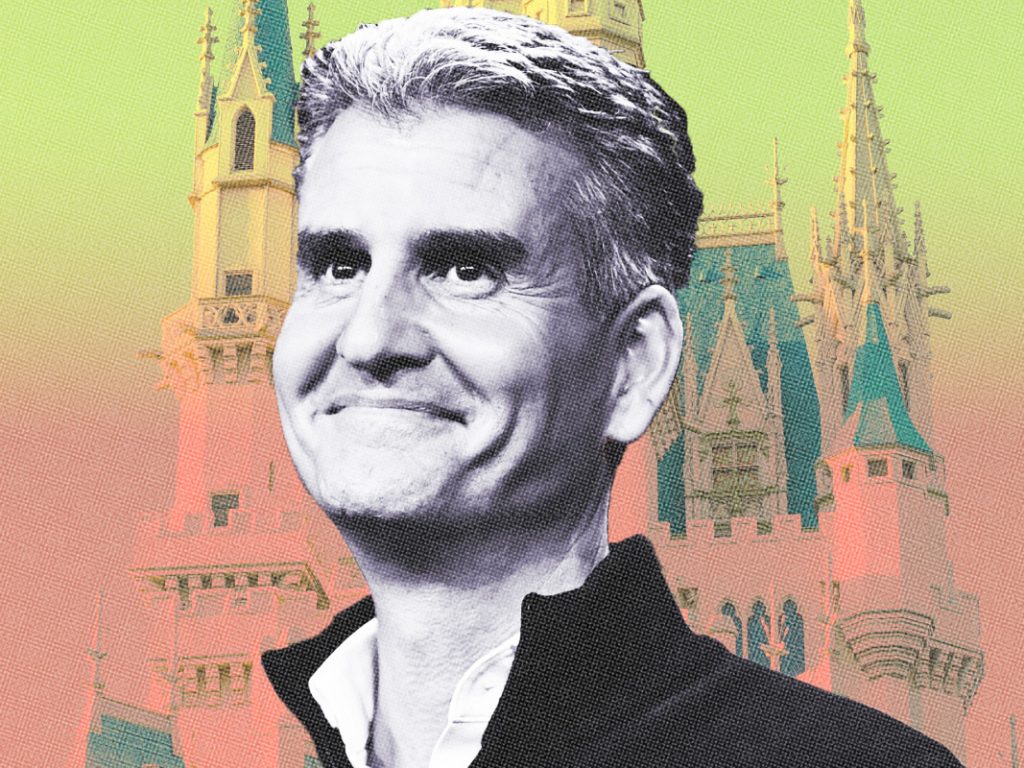
As the media and entertainment landscape continues to evolve, Disney’s recent announcement of a leadership shift, with Josh D’Amaro succeeding Bob Iger as CEO, has sent ripples through the investment community, sparking discussions about the future of streaming and the company’s strategic direction in a post-pandemic world.
Key Takeaways
- Disney’s leadership transition comes at a critical time for the company, as it navigates the challenges and opportunities of the streaming market.
- Josh D’Amaro, the current head of Disney’s Experiences Unit, which includes Parks, Cruises, Gaming, and more, is set to bring a unique perspective to the CEO role, potentially influencing the company’s approach to streaming and experiential entertainment.
- The move is seen as a strategic decision to bolster Disney’s position in the competitive streaming space, where players like Warner Bros./HBO (WBD) are also making significant moves to capture market share.
Disney’s 2026 Shift: A Deep Dive into Streaming Reforms
Disney’s announcement of Josh D’Amaro as the successor to Bob Iger as CEO marks a significant moment for the company, especially considering the parallels with the fictional world of “Succession,” where Tom Wambsgans, head of Parks & Cruises for Waystar-Royco, is chosen to succeed Logan Roy. In reality, D’Amaro’s background in managing diverse experiential sectors of Disney could signal a more integrated approach to the company’s streaming and physical entertainment offerings.
This leadership transition occurs at a time when Disney is focusing on its streaming services, including Disney+, to drive growth and compete with other major streaming platforms. The choice of D’Amaro may indicate a strategy to more closely align Disney’s physical and digital entertainment arms, potentially creating new opportunities for cross-platform content and experiential marketing.
Context: Why This Matters Now
The decision to appoint Josh D’Amaro as CEO reflects Disney’s recognition of the evolving media landscape, where streaming has become a crucial component of a company’s success. The move also comes at a time when the global economy is navigating the aftermath of the pandemic, with changing consumer behaviors and preferences. Inflation, for instance, has been a factor influencing consumer spending on entertainment, with streaming services often seen as a more affordable option compared to traditional forms of entertainment like theme park visits.
Historically, leadership transitions in major entertainment companies have often been followed by significant strategic shifts. For example, when Bob Iger previously took the reins, he oversaw the expansion of Disney’s brand through strategic acquisitions, including Pixar, Marvel, and Lucasfilm, which significantly bolstered Disney’s content offerings and paved the way for its current streaming ambitions.
Pros and Cons for Your Portfolio
- Risk: One potential downside of this transition is the uncertainty it may introduce into Disney’s short-term strategy, potentially affecting investor confidence and stock performance. The shift towards a more experiential and streaming-focused approach may also require significant investment, impacting profitability in the near term.
- Opportunity: On the other hand, D’Amaro’s unique background could bring a fresh perspective to Disney’s streaming efforts, potentially leading to innovative content and distribution strategies that attract new subscribers and increase engagement. This could be a significant opportunity for growth, especially if Disney can successfully integrate its physical and digital entertainment offerings to create unique experiences that competitors cannot match.
What This Means for Investors
For investors, the appointment of Josh D’Amaro as Disney’s CEO presents a moment to reassess their strategy regarding the company. Given the potential for significant changes in Disney’s approach to streaming and experiential entertainment, investors should consider the long-term implications of these shifts. It may be wise to hold current positions and observe how the new leadership navigates the challenges and opportunities in the streaming market, especially as Disney competes with the likes of Warner Bros./HBO and other major players.
Investors looking to capitalize on the growth potential of streaming and experiential entertainment might also consider this transition as an opportunity to buy into Disney, anticipating that the company’s integrated approach could yield innovative and appealing offerings that drive subscriber growth and revenue. However, any investment decision should be based on a thorough analysis of the company’s financials, market trends, and the broader economic context.

 Vintage 3-Tier Side Table Now $29: Walmart’s Best Furniture Deal
  Walmart’s 2-Tier Clothing Organizer on Sale for $20
  Kroger Cuts Key Customer Service: What’s Changing Now
  Nvidia Shocks Market: Will They Skip New GPU Release?
  $70 Farmhouse Storage Bench: Amazon’s Luxe Organizer
  Trucking Company Collapse: 29-Year Veteran Files Chapter 11