

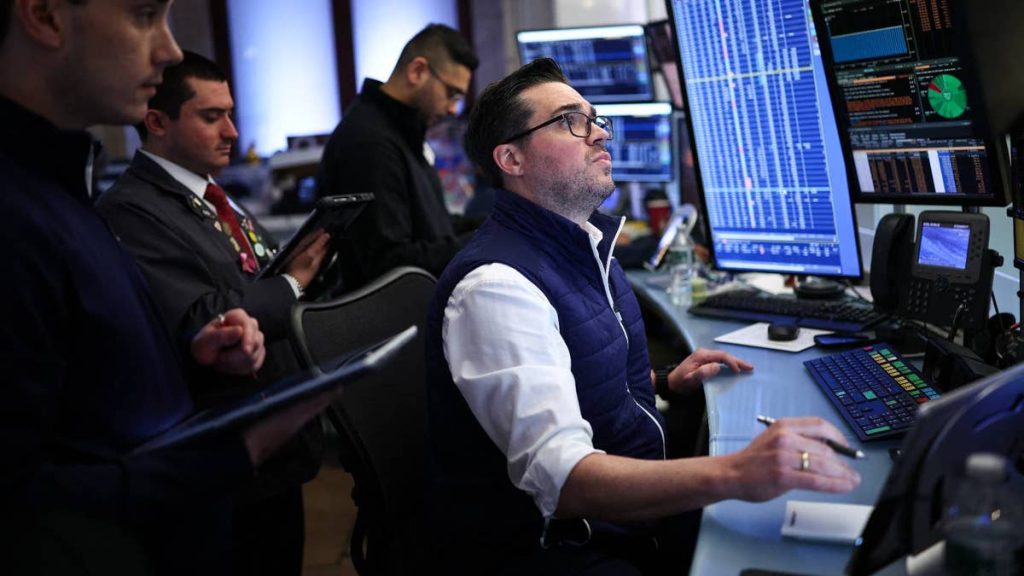
As big bank stocks continue to plummet, investors are left wondering if the downturn is a buying opportunity or a harbinger of a market crash.
Key Takeaways
- Big bank stocks have underperformed this year, but Wells Fargo believes the trend will reverse.
- The reversal is attributed to a combination of economic factors, including inflation and interest rates.
- Investors are advised to adopt a cautious approach, weighing the potential risks and rewards of investing in big banks.
Market Turmoil: A Deep Dive into the Wells Fargo Warning
Big bank stocks have been on a downward spiral, with companies like Wells Fargo, JPMorgan Chase, and Bank of America lagging behind the broader market. This trend has left investors wondering if the decline is a buying opportunity or a warning sign of a market crash. According to Mike Mayo, Managing Director and Head of U.S. Large-Cap Bank Research at Wells Fargo Securities, investors are reading the situation wrong.
Mayo pointed out that the year-to-date underperformance of big bank stocks should reverse. He cited several factors, including inflation and interest rates, which he believes will have a positive impact on the sector.
Inflation: Understanding the Concept
Inflation is a fundamental economic concept that affects the purchasing power of money. In simple terms, inflation occurs when the general price level of goods and services in an economy increases over time. This means that the same amount of money can buy fewer goods and services than it could before.
Imagine an investor who bought a stock at $100 and expected it to appreciate in value. However, due to inflation, the investor’s purchasing power has decreased, and the stock’s value is now equivalent to $80. This is because the investor can buy fewer goods and services with the same amount of money.
Historical Context: Market Crashes and Reversals
Market crashes and reversals are not new phenomena. The 2008 financial crisis, which was triggered by a housing market bubble burst, is a prime example of a market crash. Similarly, the 2021 tech boom, which saw a surge in the stock prices of tech companies, was followed by a correction.
Investors who were caught off guard by these events often suffered significant losses. However, those who took a cautious approach and adopted a long-term perspective were able to ride out the storm and even profit from the subsequent recovery.
Pros and Cons of Investing in Big Banks
- Risk: Investing in big banks carries a risk of losses due to market volatility and economic downturns. The sector is heavily regulated, and changes in regulations can impact bank profitability.
- Opportunity: Big banks offer a potential opportunity for investors to buy into a sector that is likely to benefit from a reversal in market trends. Wells Fargo’s prediction of a reversal in the sector’s underperformance could be a buying opportunity for investors.
What This Means for Investors
Investors should adopt a cautious approach and weigh the potential risks and rewards of investing in big banks. While the sector offers a potential opportunity for long-term growth, it also carries a risk of losses due to market volatility and economic downturns.
Investors should consider adopting a diversified portfolio that includes a mix of high-growth stocks, dividend-paying stocks, and bonds. This approach can help mitigate risk and provide a stable source of returns.
Ultimately, the decision to invest in big banks should be based on a thorough analysis of the sector’s fundamentals and a consideration of individual financial goals and risk tolerance.

