


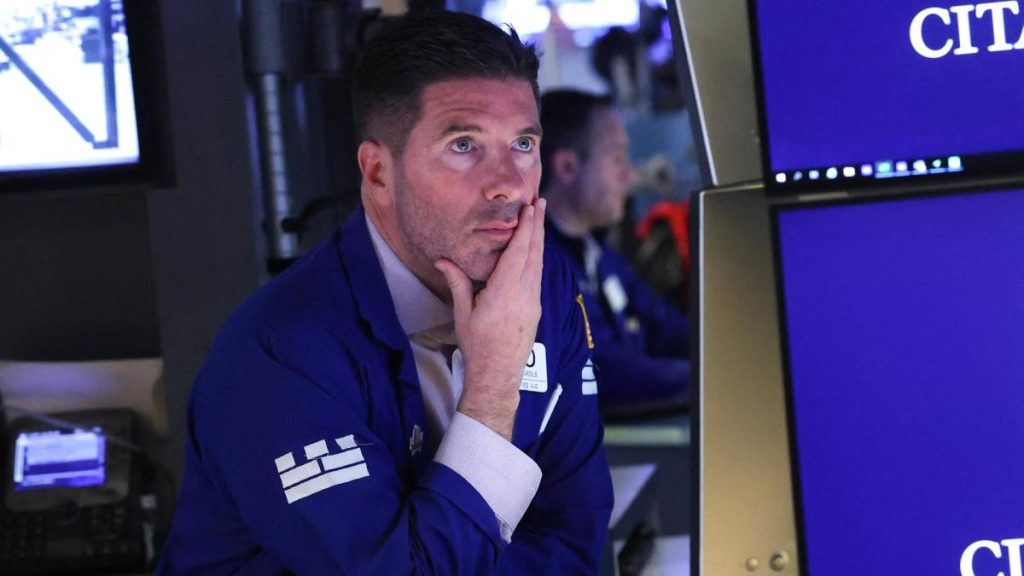
The recent Supreme Court decision to invalidate tariffs has sent shockwaves through the financial markets, leaving investors wondering what’s next for the Dow Jones Industrial Average and the overall economy.
Key Takeaways
- The Supreme Court’s invalidation of tariffs on February 20 has reignited concerns over trade deals and potential Wall Street volatility.
- President Donald Trump’s use of social media to announce tariff changes may contribute to market uncertainty and instability.
- The current situation bears similarities to the 2025 market volatility, where the Dow Jones Industrial Average experienced significant fluctuations.
Tariff Wars: A Deep Dive
The Supreme Court’s decision to invalidate tariffs has significant implications for the US economy and global trade. Tariffs are taxes imposed on imported goods, and they can have a profound impact on the prices of goods and services. In the context of the current trade wars, tariffs can lead to higher prices for consumers, reduced demand, and decreased economic growth.
Imagine an investor who bought stocks in a company that relies heavily on imported goods. If tariffs are imposed on those goods, the company’s costs will increase, potentially leading to lower profits and a decrease in stock value. This scenario illustrates the potential risks associated with tariff wars and the importance of monitoring trade policies for investors.
Historically, tariff wars have led to significant market volatility, as seen in the 2025 market fluctuations. The current situation is similar, with the Supreme Court’s decision to invalidate tariffs adding to the uncertainty and instability in the markets.
Context: Why This Matters Now
The current trade wars are a result of a complex interplay between economic, political, and social factors. The US economy is heavily reliant on global trade, and any disruptions to trade policies can have far-reaching consequences. The inflation rate, which measures the rate of change in prices of goods and services, is also closely tied to trade policies. If tariffs lead to higher prices, it can contribute to inflation, which can erode the purchasing power of consumers and decrease economic growth.
The Supreme Court’s decision to invalidate tariffs is a significant development in the ongoing trade wars. It highlights the importance of the judiciary in shaping trade policies and the potential risks associated with tariff wars. Investors need to be aware of these developments and their potential impact on the markets.
Pros and Cons for Your Portfolio
- Risk: The current market volatility and uncertainty surrounding trade policies can lead to significant losses for investors who are not prepared. A potential downside is that the tariff wars can lead to a decrease in economic growth, lower corporate profits, and a decline in stock values.
- Opportunity: On the other hand, the current situation also presents opportunities for investors who are willing to take calculated risks. A potential upside is that the tariff wars can lead to increased demand for domestically produced goods, which can benefit companies that manufacture goods in the US.
What This Means for Investors
Given the current market uncertainty and volatility, investors need to be cautious and strategic in their investment decisions. It is essential to diversify portfolios to minimize risks and maximize potential returns. Investors should also keep a close eye on trade policies and their potential impact on the markets.
A potential strategy for investors is to focus on companies that are less reliant on imported goods or have a strong domestic presence. This can help mitigate the risks associated with tariff wars and provide a more stable source of returns. Additionally, investors should consider hedging their portfolios by investing in assets that are negatively correlated with the stock market, such as bonds or gold.
In conclusion, the Supreme Court’s decision to invalidate tariffs has significant implications for the US economy and global trade. Investors need to be aware of the potential risks and opportunities associated with tariff wars and take a strategic approach to managing their portfolios. By diversifying their investments, monitoring trade policies, and being prepared for potential market volatility, investors can navigate the current uncertainty and achieve their long-term financial goals.

 Walmart’s $140 Top-Rated Air Purifier Now $63 for Large Spaces
  Warren Buffett’s Contrarian Gold Boom Prediction
  Coca-Cola Shortage Hits Fans: What’s Happening Now
  Spring into Savings: Walmart’s $50 Rocking Chair Patio Set
  Amazon Heated Vest Sale: $90 to $70 with Unbeatable Warmth
  Samsung Update Screen Issues After Google Patch: What’s Going Wrong