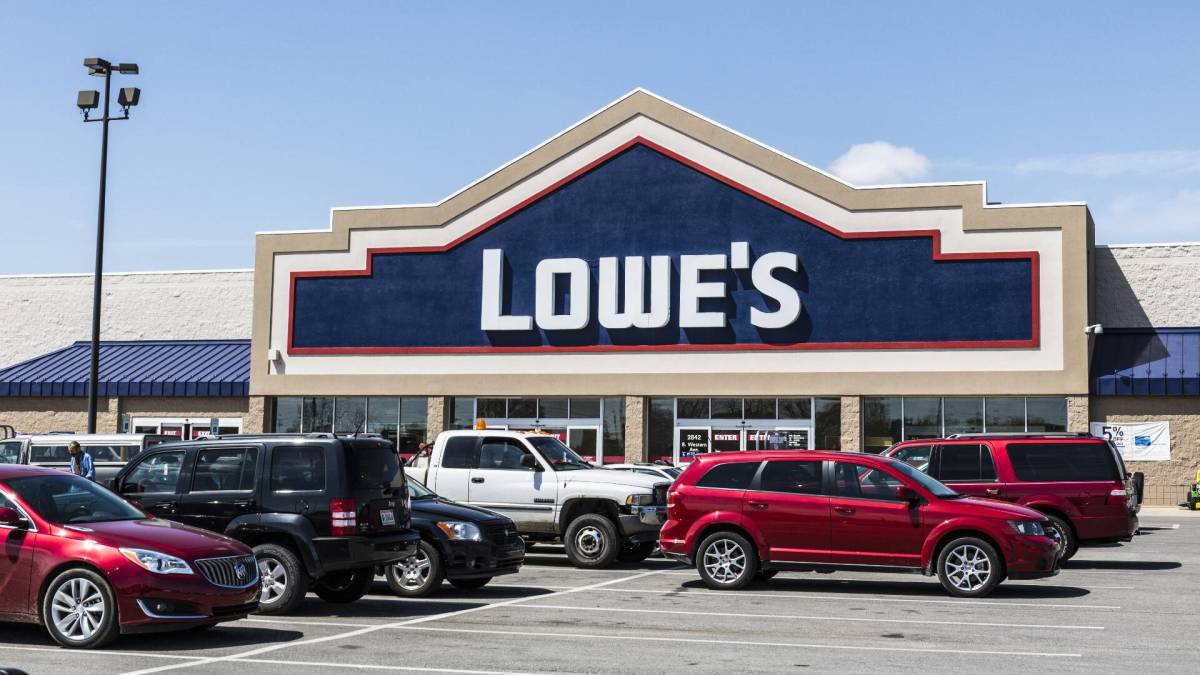
As consumers tighten their belts in response to economic uncertainty, home improvement retailer Lowe’s has announced a strategic move to bolster customer loyalty with the introduction of new free offers, aiming to combat the spending pullback and maintain its market share.
Key Takeaways
- Lowe’s is offering free services and products to enhance customer loyalty and drive sales.
- This move comes at a time when many consumers are reducing their discretionary spending due to economic pressures.
- The strategy aims to differentiate Lowe’s from its competitors and attract price-sensitive customers.
Lowe’s Strategic Move: Deep Dive
Lowe’s decision to offer free services and products is a calculated effort to retain existing customers and attract new ones during a period of economic uncertainty. By providing value-added services without additional cost, Lowe’s seeks to create a loyal customer base that will continue to shop at its stores even when budgets are tight. This approach is particularly important in the home improvement sector, where customers often have a wide range of choices and are highly sensitive to prices and services offered.
Context: Why This Matters Now
The current economic climate, characterized by rising inflation, has led to a decrease in consumer spending power. As prices for goods and services increase, consumers are more likely to prioritize essential expenses over discretionary spending, such as home improvements. In this context, Lowe’s move to offer free services is a strategic response to maintain customer engagement and drive sales. Similar strategies have been employed by retailers in the past, particularly during periods of economic downturn, to stimulate demand and build brand loyalty.
Historical Precedent
Historically, retailers have used various tactics to attract and retain customers during economic downturns. For instance, during the 2008 financial crisis, many retailers offered deep discounts and loyalty programs to keep customers engaged. Similarly, in the early 2020s, as the economy began to recover from the pandemic-induced recession, retailers focused on enhancing the customer experience through services and convenience. Lowe’s current strategy aligns with these historical precedents, adapting to the changing consumer behavior and economic conditions.
Pros and Cons for Your Portfolio
- Risk: The strategy of offering free services may not immediately yield significant returns, as it could lead to higher operational costs without a corresponding increase in sales, potentially affecting profitability.
- Opportunity: On the other hand, this approach could lead to long-term benefits, such as increased customer loyalty, positive word-of-mouth, and ultimately, higher sales volumes as the economy recovers and consumer spending increases.
What This Means for Investors
For investors, Lowe’s strategy presents a mixed bag. While the short-term impact on profitability might be a concern, the long-term potential for growth and increased market share is significant. Investors should consider the company’s ability to execute this strategy effectively, manage operational costs, and adapt to changing consumer behavior and economic conditions. A strategic perspective would be to monitor the company’s performance over the next few quarters, assessing the success of the free offers strategy in driving customer loyalty and sales growth.
Investment Strategy
Imagine an investor who is considering adding Lowe’s to their portfolio. They should weigh the potential risks, such as increased operational costs and the uncertainty of consumer response, against the potential benefits, including enhanced customer loyalty and market share growth. This investor might also consider the broader retail landscape, comparing Lowe’s strategy with that of its competitors, and assessing the overall health of the home improvement sector.
Conclusion and Future Outlook
In conclusion, Lowe’s decision to offer free services and products is a strategic move aimed at bolstering customer loyalty and driving sales in a challenging economic environment. While there are potential risks and uncertainties, the long-term benefits of this strategy could be significant. As investors consider their next moves, they should keep a close eye on how this strategy unfolds, both for Lowe’s and its competitors, and be prepared to adjust their portfolios accordingly.
Looking ahead, the success of Lowe’s strategy will depend on several factors, including the company’s ability to manage costs, innovate its services, and respond to changing consumer preferences. Moreover, the overall economic climate, including inflation rates and consumer spending trends, will play a crucial role in determining the effectiveness of this approach. As the retail landscape continues to evolve, investors and consumers alike will be watching closely to see how Lowe’s navigates these challenges and opportunities.