


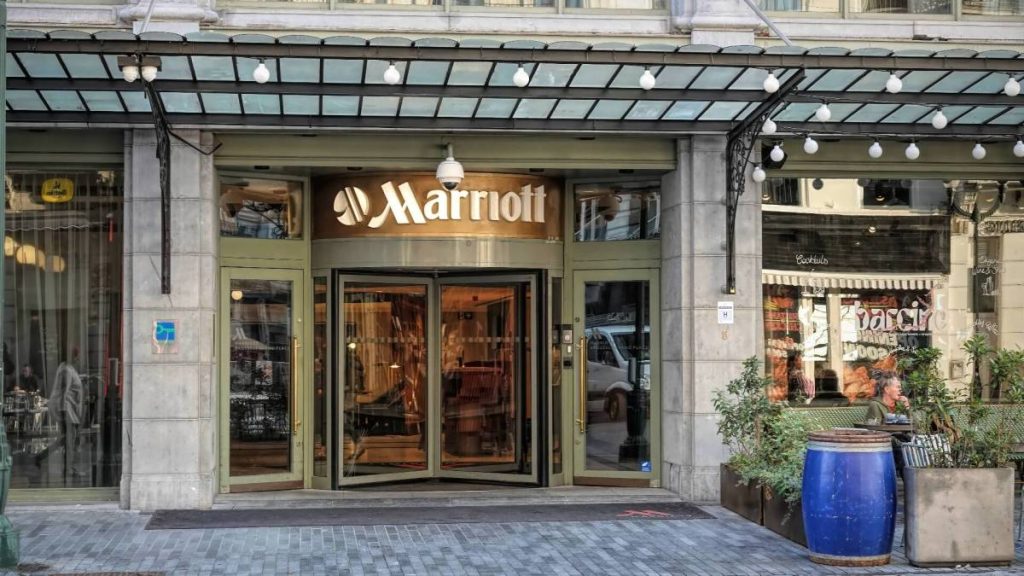
Marriott’s sudden decision to end exclusive deals for loyal customers has sent shockwaves through the hospitality industry, leaving investors to wonder what this move means for the hotel giant’s future profitability and their own investment portfolios.
Key Takeaways
- Marriott reported a 2025 full-year net income of $2.6 billion, up from $2.38 billion in 2024, driven largely by its luxury offerings.
- The chain saw a 2% increase in full-year revenue per available room (RevPAR), a key performance metric for the hospitality industry.
- The termination of exclusive deals for loyal customers could impact customer retention and loyalty, potentially affecting future revenue and profitability.
Marriott’s Shift in Strategy: A Deep Dive
Marriott’s decision to end exclusive deals for loyal customers marks a significant shift in the company’s strategy, one that could have far-reaching implications for both the hotel chain and its customers. The move comes on the heels of a successful year for Marriott, with the company’s luxury offerings once again proving to be a major driver of profit. The $2.6 billion in net income for 2025 is a notable increase from the $2.38 billion reported in 2024, and the 2% rise in RevPAR is a positive indicator of the company’s ability to maintain pricing power in a competitive market.
Imagine an investor who has been watching Marriott’s growth over the years, particularly its efforts to expand its luxury brand portfolio. This investor might be wondering how the end of exclusive deals for loyal customers will affect the company’s ability to retain its high-end clientele and maintain its premium pricing strategy. For instance, if a loyal customer who has been receiving exclusive discounts and perks is suddenly no longer eligible for these benefits, they may be more likely to consider other luxury hotel options, potentially eroding Marriott’s market share.
Context: Why This Matters Now
The context in which Marriott is making this strategic move is crucial. The hospitality industry is highly competitive, with numerous players vying for market share. The decision to end exclusive deals for loyal customers could be seen as a move to simplify the company’s loyalty program and reduce costs, but it also risks alienating some of its most valuable customers. Inflation pressures, though not directly mentioned in Marriott’s recent financial reports, are a consideration in the broader economic context, as they can affect consumer spending habits and the pricing power of companies like Marriott.
Historically, changes in loyalty programs and customer retention strategies have been pivotal for companies in the service sector, including hotels. Similar to the 2008 crash, where consumer behavior shifted significantly towards more budget-conscious decisions, today’s consumers are also looking for value but are willing to pay for premium services if they perceive them as worthwhile. Marriott’s move could be an attempt to redefine what loyalty means to its customers and how it rewards them, potentially aligning with broader consumer trends.
Pros and Cons for Your Portfolio
- Risk: The potential downside of Marriott’s decision is the loss of customer loyalty, which could lead to decreased occupancy rates and revenue. If high-end customers feel that the benefits they once enjoyed are no longer available, they might choose to stay with competitors who offer more appealing loyalty programs.
- Opportunity: On the other hand, this move could be an opportunity for Marriott to streamline its operations, reduce costs associated with maintaining complex loyalty programs, and potentially attract a broader customer base by offering more inclusive and straightforward loyalty benefits. This could lead to increased profitability and competitiveness in the market.
What This Means for Investors
For investors, the key takeaway is to closely monitor how Marriott’s decision affects customer retention and loyalty, as well as the company’s bottom line. While the move might be seen as a strategic misstep by some, it could also be a bold move to redefine customer loyalty and streamline operations. Investors should consider the potential risks and opportunities and adjust their portfolios accordingly. If Marriott can successfully navigate this change without alienating its loyal customer base, it could emerge stronger and more competitive, potentially offering a buying opportunity for investors. However, if the move backfires, it could be a signal to revisit investment strategies regarding the hospitality sector.
Ultimately, the success of Marriott’s new strategy will depend on its ability to balance the needs of its loyal customers with the need to maintain profitability and competitiveness. As the hospitality industry continues to evolve, investors will be watching closely to see how Marriott’s shift in strategy plays out and what it might mean for their investments.

 Ramit Sethi’s Top 5 Rules for Smart Homebuyers
  Major Airline Abandons U.S. Routes: What’s Behind the Cuts
  Spotify CEO’s Bold AI Move: A Game-Changing Strategy
  Walmart’s $340 Farmhouse Pantry Now $180: Unbeatable Storage Deal
  Walmart’s $8 Hands-Free Sling Bag: Must-Have Deal
  $230 HP Laptop: Unbeatable Deal on Extremely Fast Amazon Sale