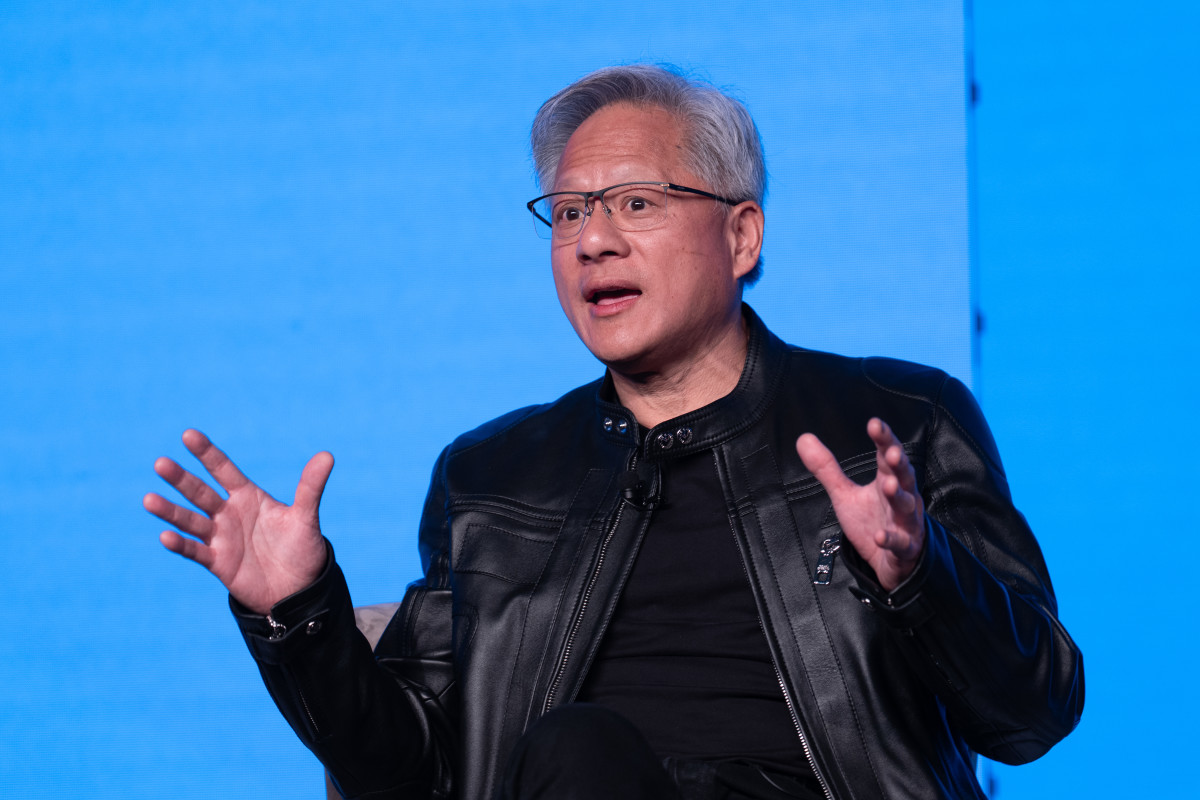
Nvidia CEO Jensen Huang’s recent comments have sparked a heated debate about the future of AI chipmaking, emphasizing the critical role Taiwan Semiconductor Manufacturing (TSM) plays in this field, and by extension, the importance of Taiwan in the global semiconductor industry.
Key Takeaways
- Nvidia CEO Jensen Huang stresses the significance of Taiwan in advanced chip production, particularly through Taiwan Semiconductor Manufacturing (TSM).
- The future of AI chipmaking is closely tied to the capabilities and innovations of TSM and similar entities in Taiwan.
- Investors and industry watchers are encouraged to consider the implications of Taiwan’s semiconductor industry on the global tech landscape, including potential investment opportunities and geopolitical risks.
Deep Dive into Nvidia and Taiwan Semiconductor
Nvidia, a leader in the graphics processing unit (GPU) market, has been at the forefront of the artificial intelligence (AI) and machine learning (ML) revolution. Jensen Huang’s comments underscore the dependence of the AI chipmaking sector on Taiwan’s semiconductor manufacturing capabilities. Taiwan Semiconductor Manufacturing (TSM), often referred to as the “crown jewel” of the chipmaking world, is the world’s largest independent semiconductor foundry, playing a critical role in the production of advanced chips used in everything from smartphones to supercomputers.
The relationship between Nvidia and TSM is symbiotic, with Nvidia relying on TSM for the manufacture of its high-performance GPUs and TSM benefiting from Nvidia’s innovative designs and large orders. This partnership has been instrumental in driving advancements in the field of AI and ML, enabling the creation of more powerful and efficient computing systems.
Context: Why This Matters Now
The emphasis on Taiwan’s role in the semiconductor industry comes at a time of heightened geopolitical tension and technological competition. The global semiconductor industry is experiencing a period of rapid growth, driven by the increasing demand for chips in emerging technologies such as 5G, the Internet of Things (IoT), and autonomous vehicles. However, this growth is also accompanied by challenges, including supply chain disruptions, inflationary pressures due to component shortages, and the ongoing impact of the COVID-19 pandemic on global trade.
Historically, the semiconductor industry has been subject to boom and bust cycles, with periods of rapid expansion followed by downturns. The current cycle, fueled by the demand for advanced chips, has led to significant investment in semiconductor manufacturing capacity, particularly in Asia. The comments from Jensen Huang highlight the strategic importance of Taiwan in this context, given its position as a global leader in semiconductor production.
Pros and Cons for Your Portfolio
- Risk: Investing in companies heavily reliant on Taiwan’s semiconductor industry, such as Nvidia and TSM, comes with geopolitical risks, including the potential for trade disputes and military conflicts that could disrupt supply chains and impact stock prices.
- Opportunity: The growing demand for advanced chips and the critical role Taiwan plays in their production present significant investment opportunities in both the semiconductor manufacturing sector and in companies like Nvidia that are driving innovation in AI and ML technologies.
What This Means for Investors
Investors should consider the long-term implications of Taiwan’s central role in the global semiconductor industry. While there are risks associated with geopolitical tensions and supply chain disruptions, the potential for growth in the AI, ML, and semiconductor sectors is substantial. A strategic perspective might involve diversifying investments across the semiconductor value chain, including in companies like Nvidia that are at the forefront of technological innovation, as well as in foundries like TSM that are critical to the production of advanced chips.
Moreover, investors should monitor developments in the global semiconductor industry closely, including advancements in technology, changes in trade policies, and shifts in geopolitical dynamics. This informed approach will enable investors to make more strategic decisions, balancing the potential risks with the significant opportunities presented by the evolving landscape of the semiconductor and AI industries.