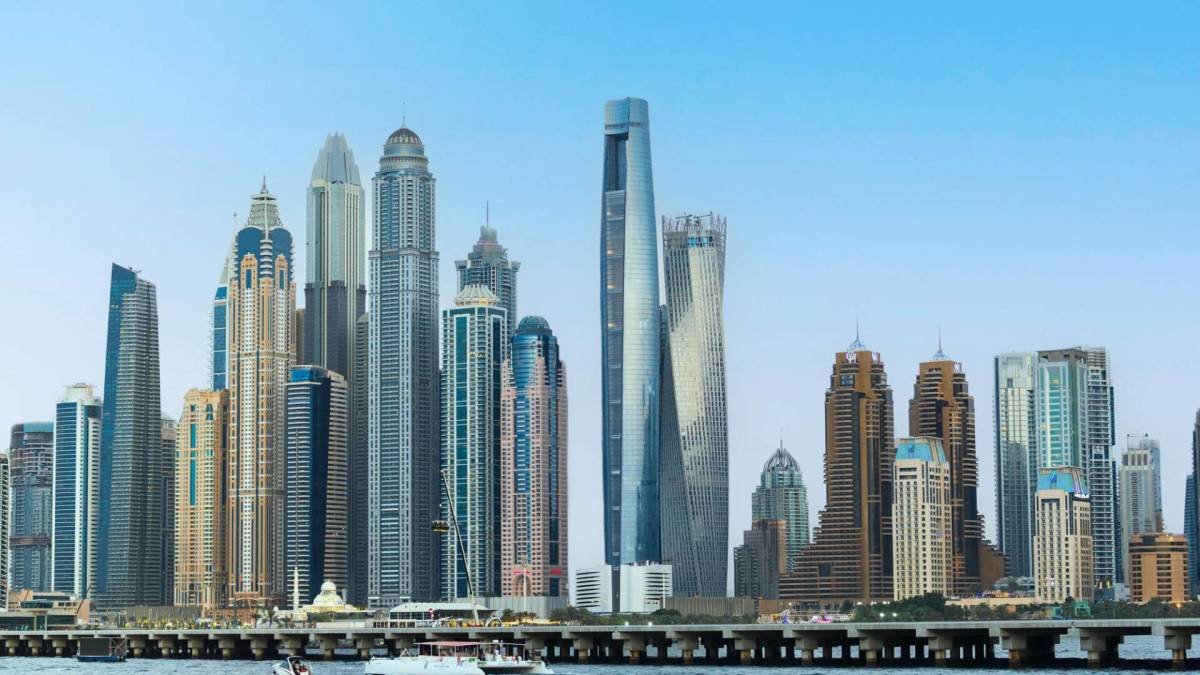
The opening of the world’s tallest hotel in Dubai marks a significant milestone in the city’s ongoing quest to push the boundaries of architectural innovation and attract high-end tourism, amidst a global economy where inflation remains a concern for investors looking to capitalize on luxury real estate and hospitality trends.
Key Takeaways
- The world’s tallest hotel is now open in Dubai, United Arab Emirates, standing at a height of 1,394 feet as part of the Ciel Dubai Marina complex.
- This project underscores Dubai’s commitment to becoming a hub for luxury tourism and real estate, competing with other major destinations worldwide.
- Investors are watching closely as this development could signal a shift in the global hospitality market, with potential implications for real estate investment trusts (REITs) and hotel stocks.
Dubai’s Luxury Real Estate Boom: A Deep Dive
Dubai has been synonymous with mega-tall skyscrapers since the Burj Khalifa claimed the title of the world’s tallest building in 2010. The city’s latest addition, the Ciel Dubai Marina, is the second-tallest residential building globally, after New York’s Central Park Tower. This feat of engineering and architecture is not only a marvel but also a testament to Dubai’s ambition to attract high-net-worth individuals and tourists seeking unique experiences.
Imagine an investor who bought into Dubai’s real estate market a decade ago, witnessing the transformation of the city’s skyline and the exponential growth of its luxury sector. Such an investor would have likely seen significant returns, given the city’s strategic location between East and West, its business-friendly environment, and its relentless pursuit of innovation.
Context: Why This Matters Now
The current economic landscape, characterized by fluctuating currency exchange rates and varying levels of economic growth across different regions, makes Dubai’s push into the luxury market a strategic move. By focusing on high-end tourism and real estate, Dubai aims to diversify its economy, reduce dependence on oil revenues, and position itself as a stable and attractive destination for international capital.
Historically, similar investments in iconic landmarks and luxury developments have had mixed outcomes. For instance, the construction of the Burj Khalifa was completed during a period of global financial uncertainty, and while it became an instant icon, its economic viability was questioned in the short term. However, over the years, it has contributed significantly to Dubai’s tourism industry and real estate market.
Pros and Cons for Your Portfolio
- Risk: Investing in luxury real estate or hospitality stocks in Dubai comes with the risk of market volatility, especially if global economic conditions deteriorate. Additionally, the high-end market can be sensitive to geopolitical tensions and changes in consumer spending habits.
- Opportunity: On the other hand, the potential for long-term growth is significant. Dubai’s strategic investments in infrastructure, coupled with its vision for innovation and sustainability, could make it an attractive and stable hub for luxury tourism and business, thereby increasing the value of related investments over time.
What This Means for Investors
For investors considering a stake in Dubai’s luxury real estate or hospitality sector, it’s crucial to adopt a strategic perspective. This involves diversifying your portfolio to mitigate risks, keeping a close eye on global economic trends, and being prepared to hold investments for the long term to ride out any short-term fluctuations. Given the unique position of Dubai in the global market, investors should also consider the potential for dividend yields from REITs or hotel stocks, which could provide a steady income stream.
In conclusion, the opening of the world’s tallest hotel in Dubai is more than an architectural achievement; it’s a signal of the city’s intent to lead in the luxury market. For savvy investors, this presents both challenges and opportunities, requiring a deep understanding of the global economy, the hospitality industry, and the specifics of Dubai’s real estate market.